Last updated
Coffee Shop Business Plan: Startup Costs $80K-$350K (2026)
A coffee shop business plan should include startup costs of $80,000 to $350,000, revenue projections built from daily transactions times average ticket, and a 12-month cash flow forecast. Lenders require a debt service coverage ratio of 1.25x or higher.
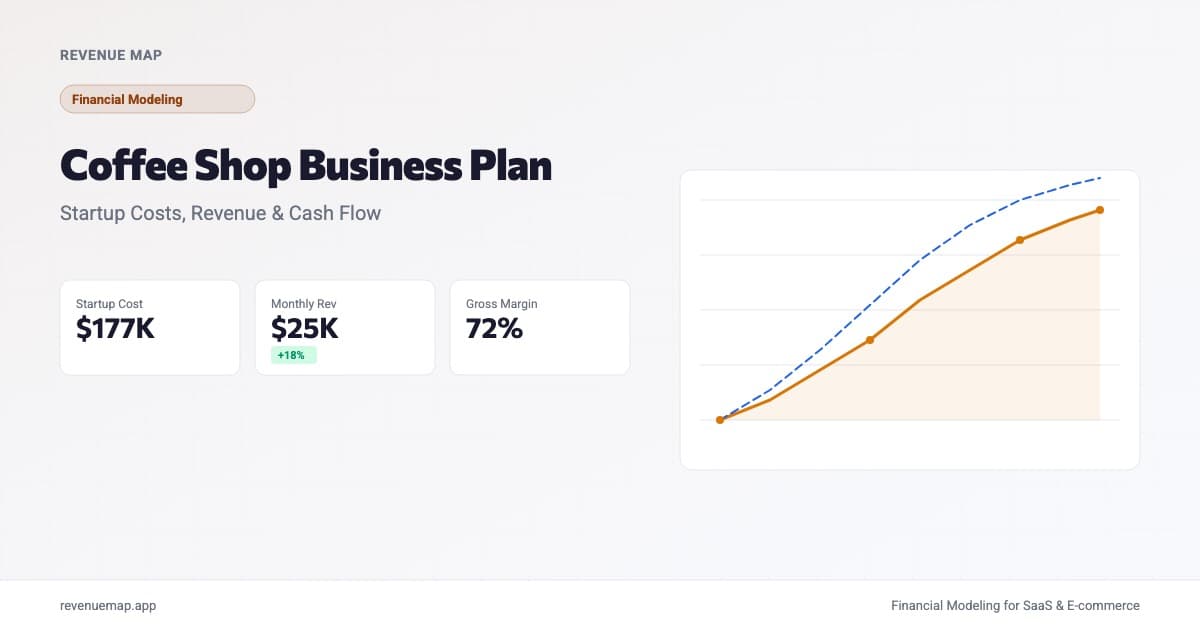
A coffee shop business plan needs a financial section built on actual cost data and defensible revenue projections. Lenders approve coffee shop loans based on projected cash flow, a startup cost breakdown they can verify, and proof the shop can cover its debt payments during the slow early months. The concept and the brand story matter, but the numbers decide whether the loan gets funded.
That point landed hard this week when Entrepreneur profiled a business owner who lost $180,000 in retirement savings on a venture that failed. Meanwhile, O'Charley's abruptly shut down all corporate-owned locations and Denny's added five more closures in Minnesota and Wisconsin. These are established brands with decades of operating history. If they can fail when the financial math stops working, a brand-new coffee shop without a credible plan doesn't stand a chance.
Here is how to build the financial section of your coffee shop business plan with the real numbers lenders expect.
How Much Does It Cost to Open a Coffee Shop?
Startup costs for a coffee shop range from about $80,000 for a small counter-service cafe to $350,000 for a full-service shop with custom buildout, full seating, and a food program. Most independent coffee shops land in the $150,000 to $250,000 range.
Here is a realistic breakdown for a 1,200-square-foot neighborhood coffee shop:
| Category | Low Estimate | Mid Estimate | High Estimate |
|---|---|---|---|
| Leasehold improvements | $20,000 | $55,000 | $120,000 |
| Espresso machine and grinders | $12,000 | $22,000 | $40,000 |
| Other equipment (brewers, blenders, refrigeration) | $8,000 | $15,000 | $25,000 |
| Furniture and fixtures | $5,000 | $15,000 | $35,000 |
| POS system and technology | $2,000 | $5,000 | $10,000 |
| Permits, licenses, health inspection | $2,000 | $5,000 | $12,000 |
| Initial inventory (coffee, milk, food, supplies) | $3,000 | $6,000 | $10,000 |
| Insurance (first year) | $3,000 | $6,000 | $10,000 |
| Marketing, signage, branding | $3,000 | $8,000 | $18,000 |
| Working capital (6 months) | $25,000 | $40,000 | $70,000 |
| Total | $83,000 | $177,000 | $350,000 |
The working capital line is where most first-time cafe owners cut corners, and it is the line that saves the business. You will have slow mornings, equipment breakdowns, and a learning curve on labor scheduling in the first six months. A plan that spends everything on the buildout and opens with an empty cash reserve is exactly the scenario that leads to closure. Use the startup cost calculator to adjust these figures for your specific concept and market.
The espresso machine deserves special attention. A two-group commercial machine from La Marzocco or Synesso runs $15,000 to $25,000. Going cheaper with a $5,000 machine saves upfront but introduces reliability problems and limits drink quality. Most specialty coffee lenders have seen enough plans to know the difference.
How to Project Coffee Shop Revenue
Revenue for a coffee shop is driven by foot traffic and average ticket. The core formula:
Monthly Revenue = Daily Transactions x Average Ticket x Days Open per Month
The challenge is picking realistic inputs. Here is what industry benchmarks actually look like across different coffee shop formats:
| Format | Avg Ticket | Daily Transactions | Days/Month | Monthly Revenue |
|---|---|---|---|---|
| Neighborhood cafe (counter service) | $5.50 | 150 | 30 | $24,750 |
| Specialty coffee bar | $7.00 | 120 | 30 | $25,200 |
| Drive-through only | $5.00 | 250 | 30 | $37,500 |
| Cafe with food program | $9.00 | 130 | 30 | $35,100 |
| Coffee kiosk (mall, office) | $5.50 | 180 | 26 | $25,740 |
Drive-through locations generate the highest revenue because transaction volume more than compensates for a slightly lower ticket. A cafe with a food program pulls the average ticket up significantly, but it also adds food cost, prep labor, and health department complexity. Both can work. The right format depends on your location, capital, and operating style.
For year one, model conservatively. Assume 50% of the daily transaction numbers above in months one through three, ramping to 75% by month six, and reaching full capacity around month nine to twelve. Lenders will discount any plan that shows full capacity on day one. Our financial projections template guide covers the framework for building these forecasts for any business type.
Calculate Your Coffee Shop Revenue
Coffee Shop Revenue Calculator
Estimate your monthly and annual coffee shop revenue
Coffee Shop Margins and Cost Benchmarks
Coffee is a high-margin product, and that is both the appeal and the trap. Beverage gross margins of 65% to 78% look great on paper, but rent, labor, and overhead consume most of the spread before anything reaches the bottom line.
| Category | % of Revenue | Monthly (at $25K rev) |
|---|---|---|
| Cost of goods sold (coffee, milk, food) | 25-35% | $6,250-$8,750 |
| Labor (baristas, manager) | 30-40% | $7,500-$10,000 |
| Rent and occupancy | 8-15% | $2,000-$3,750 |
| Other operating expenses | 8-12% | $2,000-$3,000 |
| Net profit | 2-7% | $500-$1,750 |
Here's the thing: those net margins are not a mistake. They are the reality of the coffee business. A 5% net margin on $300,000 in annual revenue is $15,000. That is why volume and average ticket matter so much. Adding a food program, retail beans, or merchandise can push the blended margin higher, but each addition brings its own cost structure.
Labor is the biggest variable and the hardest to control. A single extra barista on a slow shift costs $15 to $20 per hour and erases the margin on dozens of drinks. Track labor as a percentage of revenue weekly, not monthly. If it drifts above 38%, adjust scheduling immediately.
12-Month Cash Flow for a New Coffee Shop
The cash flow forecast is the section that determines whether your plan gets funded. Here is a simplified 12-month projection for a neighborhood cafe with $177,000 in startup costs, a $130,000 SBA loan, and $47,000 in owner equity.
| Month | Revenue | COGS (30%) | Labor (35%) | Other OpEx | Loan Payment | Net Cash Flow | Cumulative Cash |
|---|---|---|---|---|---|---|---|
| 1 | $12,375 | $3,713 | $4,331 | $4,500 | $1,520 | -$1,689 | $38,311 |
| 2 | $14,850 | $4,455 | $5,198 | $4,500 | $1,520 | -$823 | $37,488 |
| 3 | $17,325 | $5,198 | $6,064 | $4,600 | $1,520 | -$57 | $37,431 |
| 6 | $22,275 | $6,683 | $7,796 | $4,800 | $1,520 | $1,476 | $40,483 |
| 9 | $24,750 | $7,425 | $8,663 | $5,000 | $1,520 | $2,142 | $47,409 |
| 12 | $24,750 | $7,425 | $8,663 | $5,100 | $1,520 | $2,042 | $53,535 |
Other operating expenses include rent, utilities, insurance, marketing, supplies, and maintenance. The loan payment assumes a 10-year SBA 7(a) loan at 10.5% interest.
The first three months show negative cash flow. That is normal for a coffee shop and exactly why the working capital reserve exists. Notice the cumulative cash position stays well above zero throughout. If your projection shows cumulative cash going negative in any month, you need either more working capital, a smaller buildout, or a phased opening.
Track your actual burn rate against this plan weekly. The gap between projected and actual costs shows up first in labor and COGS. A 5% miss on labor cost in month two is fixable. The same miss discovered in month eight means six months of leaked cash.
What Do Lenders Check in a Coffee Shop Business Plan?
The financial section carries the lending decision. Our full guide on writing a business plan for a business loan covers the broader framework, but here are the five items coffee shop lenders focus on:
-
Debt service coverage ratio (DSCR). Can the shop generate enough cash to cover loan payments with room to spare? Most lenders require 1.25x or higher. In the year-one example above, stabilized net operating income of roughly $3,560/month against a $1,520 payment gives a DSCR of 2.3x. Even the weakest ramp-up month stays above 1.0x with the working capital cushion.
-
Use of funds. Every dollar of the loan needs a specific destination. Not "equipment" but "La Marzocco Linea PB two-group ($18,500), Mazzer Major V grinder ($2,800), True two-door refrigerator ($3,200)." Specificity builds credibility.
-
Owner equity. SBA loans typically require 10% to 20% owner injection. In the example above, $47,000 on a $177,000 project is 27%, which comfortably exceeds the minimum.
-
Location economics. Lenders want proof the foot traffic supports your projections. Reference the lease terms, the daily pedestrian count, nearby anchors (office buildings, universities, transit), and comparable cafe performance in the area. A coffee shop projecting 150 daily transactions on a residential side street with no foot traffic will get questioned.
-
Comparable data. Anchor every assumption in something a loan officer can verify. The National Coffee Association reports that 67% of Americans drink coffee daily. Specialty Coffee Association data shows average tickets of $4.50 to $7.00. These are the kinds of benchmarks that make projections defensible. For comparison, see how the restaurant business plan and food truck business plan structure the same lender-facing sections for their respective formats.
Common Mistakes in Coffee Shop Financial Plans
-
Overestimating the average ticket. A $5.50 average is realistic for a drip-and-espresso shop. Projecting $8.00 because you plan to sell $6 lattes ignores that 30% to 40% of transactions are drip coffee, tea, or a $3 pastry. Weight the average across your full menu mix.
-
Ignoring the afternoon slump. Most coffee shops do 60% to 70% of their revenue before noon. The afternoon is slower, and adding lunch or evening hours adds labor cost that the revenue may not cover. Model revenue by daypart, not just daily totals.
-
Skipping pre-opening costs. Rent during buildout (often 2 to 4 months), staff training before opening, soft-opening discounts, and health department inspections all cost money before you serve a single paying customer. Budget $8,000 to $15,000 for pre-opening expenses.
-
No equipment maintenance reserve. An espresso machine service call runs $200 to $500. A grinder burr replacement costs $300 to $600. Budget $300 per month for maintenance and keep $3,000 in reserve for emergency repairs.
Key Takeaways
- Coffee shop startup costs range from $80,000 for a simple counter-service kiosk to $350,000 for a full-service cafe with custom buildout. Always include 6 months of working capital in your total.
- Build revenue projections from daily transactions times average ticket times days open. A neighborhood cafe serving 150 customers at a $5.50 average ticket generates about $24,750 per month at full capacity.
- Beverage gross margins of 65% to 78% are strong, but net margins of 2% to 7% leave almost no room for error. Track labor and COGS weekly.
- Your 12-month cash flow forecast should show cumulative cash that never goes negative after funding, even during the ramp-up months when the shop runs at a loss.
- Lenders want a DSCR of 1.25x or higher. Build your projections so that the stabilized months clear this threshold comfortably.
Ready to build the financial model behind your coffee shop business plan? Start with Revenue Map, select your cafe format, and get a three-year projection you can hand to a lender. Free, two minutes.
Related Articles
Beauty Supply Store Business Plan: Costs and Projections
Build the financial section of your beauty supply store business plan with real startup costs, revenue projections, and the cash flow forecast lenders require.
Salon Suite Business Plan: Costs and Projections
Build the financial section of your salon suite business plan with startup costs, rental revenue projections, and the cash flow lenders check.
Hot Dog Cart Business Plan: Costs and Projections
Build the financial section of your hot dog cart or food cart business plan with startup costs, revenue projections, and the cash flow lenders check.