Cake Shop Business Plan: Costs and Projections
A cake shop business plan should include startup costs of $10,000 for a home-based operation to $185,000 for a full retail storefront. Custom cake shops earn gross margins of 60% to 75%, but the order-based revenue model means cash flow depends heavily on booking volume and seasonal peaks like wedding season.
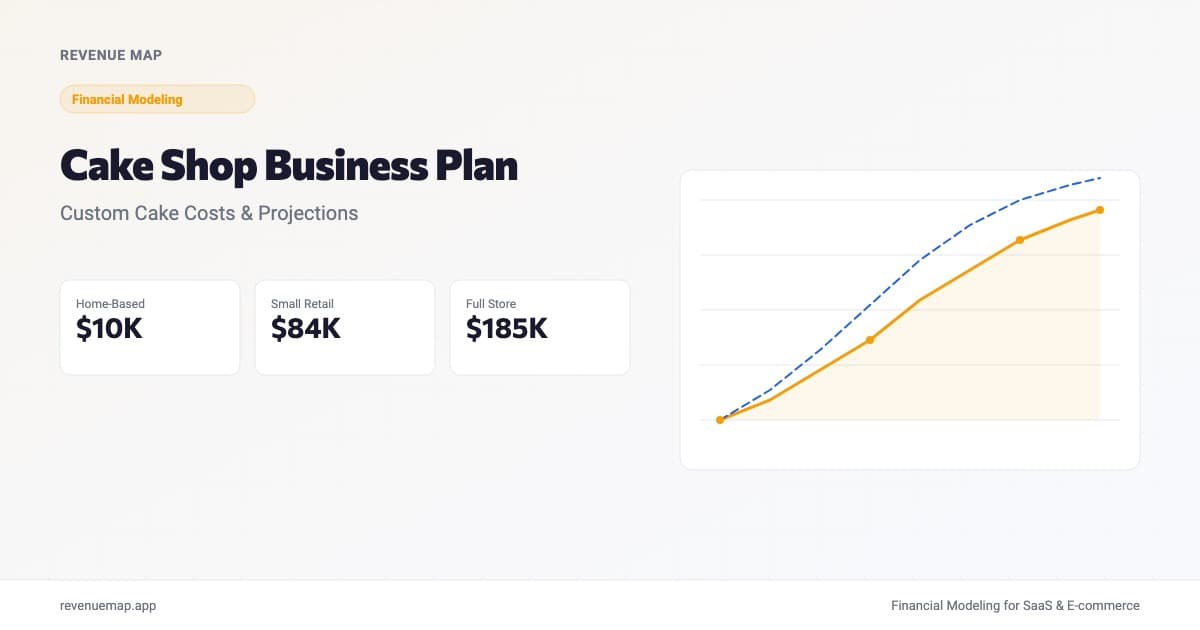
A cake shop business plan needs a financial section built on custom order pricing, realistic booking volume, and the seasonal cash flow patterns that define this business. Lenders approve cake shop loans based on projected revenue per order, a startup cost breakdown they can verify, and proof the shop can cover its debt payments during slow months. The concept and the portfolio matter, but the numbers close the deal.
That connection between financial planning and real assets showed up in this week's news. Small Business Trends broke down what counts as an equipment asset and why it matters for business operations, a concept that hits cake shops especially hard. Commercial ovens, stand mixers, and refrigerated display cases represent your single largest capital outlay, and how you classify and finance those assets shapes both your loan application and your tax strategy.
Here is a full breakdown of cake shop financials in 2026, organized by format, with the line items lenders and landlords actually ask about. If you are looking for a broader retail bakery plan covering bread, pastries, and high-volume walk-in sales, see the bakery business plan guide instead.
What Does It Cost to Open a Cake Shop?
The total depends on three things: your operating model (home-based, shared kitchen, or retail storefront), the condition of the space, and your market. A home baker operating under cottage food laws can start for under $15,000. A full retail cake shop with a commercial kitchen, walk-in cooler, and tasting room costs ten times that.
| Category | Home-Based | Shared Kitchen | Small Retail | Full Storefront |
|---|---|---|---|---|
| Kitchen equipment | $3,000 | $5,000 | $20,000 | $45,000 |
| Leasehold improvements | $0 | $0 | $15,000 | $40,000 |
| Display cases and furniture | $0 | $0 | $5,000 | $15,000 |
| Decorating supplies (initial) | $1,500 | $2,000 | $4,000 | $8,000 |
| Permits, licenses, insurance | $500 | $2,000 | $5,000 | $10,000 |
| Branding, website, marketing | $1,000 | $2,000 | $5,000 | $10,000 |
| Working capital (6 months) | $4,000 | $12,000 | $30,000 | $57,000 |
| Total | $10,000 | $23,000 | $84,000 | $185,000 |
Most first-time cake shop owners start with a home-based or shared kitchen model and upgrade to retail after building a client base. That is not just frugal advice: it is the path that lets you prove demand before committing to a lease.
The Five Biggest Cost Categories
1. Kitchen Equipment ($3,000 to $45,000)
Equipment is where cake shops diverge sharply from retail bakeries. A bakery needs deck ovens, proofers, and bread-slicing machines. A cake shop needs precision: a reliable commercial oven, a heavy-duty stand mixer for thick batters and buttercream, an airbrush system for custom work, and enough refrigeration to hold finished multi-tier cakes without damage.
| Item | Home-Based Range | Retail Range |
|---|---|---|
| Commercial oven (convection) | $1,500 (residential upgrade) | $3,000 to $15,000 |
| Stand mixer (20-30 qt) | $800 (countertop) | $1,500 to $5,000 |
| Refrigeration (reach-in or walk-in) | $400 | $2,000 to $10,000 |
| Airbrush kit and compressor | $150 | $300 to $800 |
| Decorating tools, turntables, molds | $300 | $1,000 to $3,000 |
Here's the thing: used commercial mixers and ovens are far easier to find than most new owners expect. Restaurant closures and bakery liquidations put quality KitchenAid commercial and Hobart mixers on the secondary market at 30% to 50% below retail. The mixer is the workhorse of a cake shop, so buy the best one you can afford, but it does not need to be brand new.
2. Leasehold Improvements ($0 to $40,000)
Home-based cake businesses skip this entirely. For retail spaces, the buildout depends on whether you find a second-generation food-service space (with hood vents, grease traps, and commercial plumbing already installed) or a raw retail shell. A former sandwich shop or small bakery cuts buildout costs by $15,000 to $25,000.
Budget for a commercial hood vent if required by code, upgraded electrical for ovens, food-safe wall and floor finishes, and a customer-facing tasting area or display counter. The tasting area matters more than most owners realize: custom cakes sell through consultation, and the physical space where tastings happen directly affects your close rate.
3. Working Capital ($4,000 to $57,000)
Custom cake revenue is lumpy. Wedding season (May through October) drives 50% to 60% of annual revenue for most cake shops, which means January through March can be painfully slow. Without cash reserves, a single slow quarter forces difficult choices about rent, supplies, and marketing.
Budget six months of fixed costs: rent, insurance, loan payments, and minimum supply inventory. For a small retail cake shop with $4,000 monthly rent and $1,000 in other fixed expenses, that means $30,000 in reserves before you take your first order.
4. Decorating Supplies and Inventory ($1,500 to $8,000)
Fondant, gum paste, food coloring, edible glitter, cake boards, boxes, and delivery packaging add up quickly. Unlike a restaurant that orders ingredients daily, a cake shop needs a deeper initial inventory of specialty items that may not be available locally. Factor in butter and cream cheese at wholesale prices (your two highest-volume ingredients by cost) plus specialty flours, extracts, and chocolate.
5. Permits, Licenses, and Insurance ($500 to $10,000)
Home-based cake shops face a patchwork of cottage food laws that vary by state. Some states cap annual revenue at $25,000 to $75,000 for cottage food operations, limit you to direct-to-consumer sales, or restrict the types of products you can sell. Check your state's rules before building a plan around a home kitchen.
Retail shops need a food service license, health department permits, a certificate of occupancy, general liability insurance ($1,000 to $3,000/year), and product liability insurance if you ship cakes. Allergy liability is a real concern for cake shops, so insurance is not optional.
How Custom Cake Shops Generate Revenue
Unlike a retail bakery that depends on foot traffic and $4 muffin sales, a cake shop runs on custom orders with higher per-unit revenue and a longer sales cycle. The core revenue formula:
Monthly Revenue = Orders per Month x Average Order Value
Typical pricing and volume for an established cake shop:
| Product | Price Range | Monthly Volume | Revenue Share |
|---|---|---|---|
| Custom decorated cakes | $150 to $800 | 15 to 40 | 55% to 70% |
| Wedding cakes | $400 to $2,000+ | 3 to 10 | 15% to 30% |
| Cupcakes and cake pops (bulk) | $30 to $150 | 20 to 50 | 10% to 20% |
| Tasting consultations (credited to order) | $25 to $50 | 5 to 15 | 1% to 3% |
Custom cakes carry gross margins of 60% to 75%, significantly higher than the 40% to 55% typical for bread and commodity pastries. Wedding cakes sit at the top of the margin range because labor and design skill command a premium that ingredient costs alone do not explain.
The honest answer is that volume, not margin, is what determines whether a cake shop survives. A shop averaging 25 custom orders per month at $250 each generates $75,000 annually. At 65% gross margin, that leaves roughly $49,000 to cover rent, labor, marketing, and debt service. If you need the business to support a full-time salary plus expenses, you need either higher volume, higher average order value, or a supplemental revenue stream like cupcake subscriptions or cake decorating classes.
Calculate Your Cake Shop Startup Costs
Cake Shop Startup Cost Calculator
Estimate your total investment by operating model
Want to model this over 36 months with scenarios? Try Revenue Map free →
First-Year Cash Flow: What to Expect
A cake shop's first year looks nothing like a restaurant's. Restaurants ramp up daily covers over weeks. Cake shops build an order pipeline over months, with revenue concentrated in wedding and holiday seasons.
Plan for these cash flow realities:
- Months 1 to 3: Mostly sample work, portfolio building, and tastings. Revenue covers 20% to 40% of expenses. This is where working capital keeps you alive.
- Months 4 to 6: Repeat customers and referrals start producing consistent bookings. Revenue covers 50% to 80% of expenses.
- Months 7 to 12: If you opened before wedding season, months 5 through 10 should generate your highest revenue. A well-marketed shop can approach break-even by month 8 to 10.
For the full cash flow projection template, see the cash flow projection guide. The break-even analysis framework shows you exactly how many orders per month you need at your target pricing.
How to Finance a Cake Shop
Most cake shop owners use personal savings for home-based startups and a combination of savings plus an SBA loan for retail locations. The typical capital stack:
Total Startup Cost = Owner Equity (20-40%) + SBA 7(a) Loan (40-60%) + Equipment Financing (10-20%)
SBA 7(a) loans cover up to $5 million with terms up to 10 years for equipment. Lenders require a written business plan with financial projections, a startup cost breakdown, and a debt service coverage ratio of at least 1.25x. Equipment financing covers ovens and mixers separately at 3 to 7 year terms.
Entrepreneur recently reported that raising money is not the hard part for new business owners; what trips them up is what happens after the check clears. For cake shops, that means having the projections in place before you spend: a clear order volume target, a pricing strategy that covers your actual costs, and enough working capital to survive the slow months.
Key Takeaways
- Cake shop startup costs range from $10,000 (home-based) to $185,000 (full retail storefront), with most independent shops landing between $55,000 and $120,000.
- Custom cakes earn 60% to 75% gross margins, but the order-based model means cash flow is seasonal and lumpy. Budget six months of working capital.
- Equipment (oven, mixer, refrigeration) is your largest capital expense and qualifies as a depreciable business asset. Buy used where possible to save 30% to 50%.
- A cake shop is not a bakery. The revenue model, cost structure, and seasonality are different enough that a generic bakery plan will not serve you. Build projections around order volume and average order value.
- Use the cake shop startup cost calculator to adjust these numbers for your market, then plug them into a full projection. Build yours free in two minutes.
Related Articles
Pizza Shop Business Plan: The Financial Section
Build the financials for your pizza shop business plan with real startup costs, revenue projections, and margins lenders verify.
Ice Cream Truck Business Plan: Costs and Numbers
Build the financial section of your ice cream truck business plan with real startup costs, seasonal revenue projections, and the cash flow lenders need.
Self Storage Business Plan: Costs and Projections
Build the financial section of your self storage business plan with real startup costs, revenue projections, and the numbers lenders require.