Food Truck Startup Costs: Full 2026 Breakdown
Food truck startup costs typically range from $50,000 to $200,000. The biggest line items are the truck itself ($25,000 to $130,000), commercial kitchen equipment ($15,000 to $45,000), and working capital for the first three months ($8,000 to $25,000).
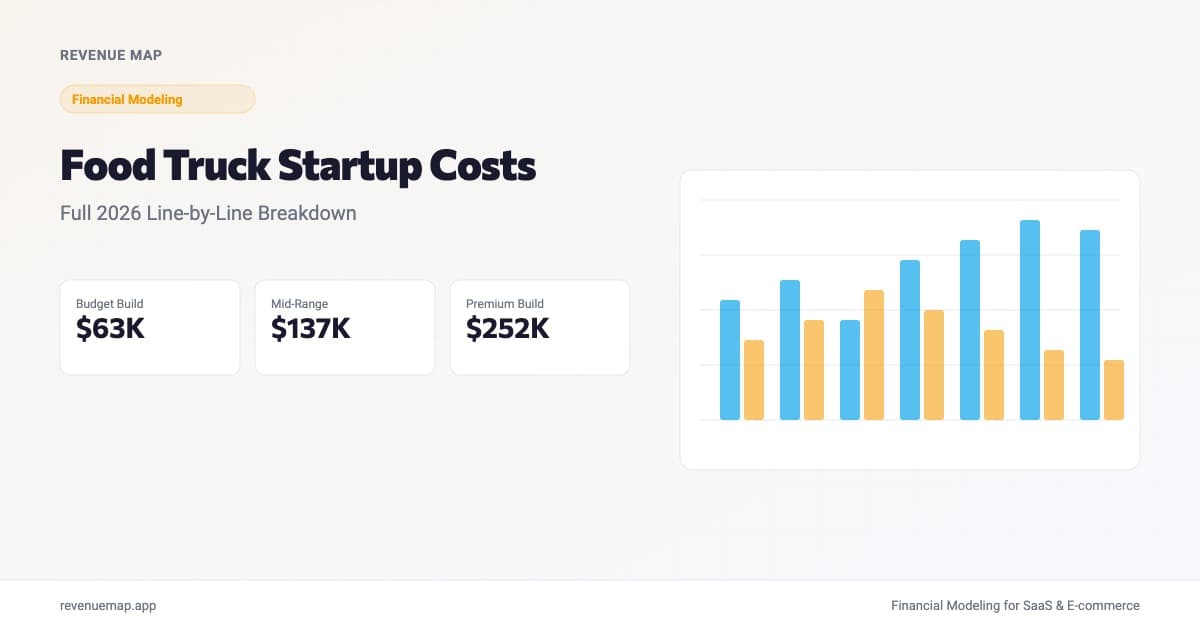
Food truck startup costs range from roughly $50,000 to $200,000, depending on whether you buy a used truck or a new custom build, how complex your menu is, and where you plan to operate. The truck purchase and kitchen equipment account for roughly 70% of total startup capital, with permits, insurance, branding, and working capital making up the rest.
That cost math matters more than most founders realize. This week, Yardbird, a Miami-based fried chicken chain, filed for Chapter 11 bankruptcy, blaming expansion costs and mounting debt. Meanwhile, a Wendy's franchisee operating 314 locations filed for bankruptcy after six straight quarters of falling sales. These are large-scale operations, but the lesson scales down: food businesses that don't plan their costs carefully don't survive. A food truck has the advantage of a much lower entry point, but a $50,000 mistake can end a solo operator's business just as fast as a $50 million one can sink a chain.
Here is a line-by-line breakdown of what it actually costs to start a food truck in 2026, what founders tend to miss, and how to keep the total manageable.
What Does a Food Truck Actually Cost?
The total depends on three main factors: the truck itself (new vs. used, size, condition), the kitchen equipment you need for your menu, and your local permit and insurance requirements.
Here is a realistic cost breakdown for a standard street food truck:
| Category | Budget Build | Mid-Range Build | Premium Build |
|---|---|---|---|
| Truck (used vs. new) | $25,000 | $65,000 | $130,000 |
| Commercial kitchen equipment | $15,000 | $28,000 | $45,000 |
| Generator | $3,000 | $6,000 | $12,000 |
| Fire suppression system | $2,500 | $4,000 | $6,000 |
| Vehicle wrap and branding | $2,500 | $4,500 | $8,000 |
| Permits and licenses | $2,000 | $5,000 | $10,000 |
| Insurance (first year) | $3,000 | $4,500 | $7,000 |
| POS system and tech | $500 | $1,500 | $3,000 |
| Initial food inventory (30 days) | $2,000 | $3,500 | $6,000 |
| Working capital (3 months) | $8,000 | $15,000 | $25,000 |
| Total | $63,500 | $137,000 | $252,000 |
The "budget build" assumes a used step van or trailer, refurbished equipment, and a simple menu. The "premium build" reflects a new truck with a custom layout, commercial-grade everything, and enough cash reserve to absorb slow months without panic. Most first-time operators land in the mid-range, around $100,000 to $150,000 all in.
The Truck: Your Biggest Decision
The truck is typically 40% to 55% of total startup costs. You have three main options.
Used food truck ($25,000 to $60,000). A used truck already equipped for food service saves time and money, but inspect carefully. Check the engine, transmission, and generator hours. A $30,000 used truck that needs $15,000 in repairs is not a bargain. Budget an additional $3,000 to $5,000 for a mechanic's inspection and any immediate maintenance.
New truck with a custom kitchen build ($65,000 to $130,000). You buy a new cargo van or step van and have a fabricator install the kitchen. This gives you control over layout, equipment placement, and ventilation. Build time runs 8 to 16 weeks, which means you are paying insurance and loan interest before earning a dollar.
Food truck trailer ($10,000 to $35,000). A towable trailer is the cheapest entry point. You supply the tow vehicle. The tradeoff: trailers are harder to park in some cities, and several municipalities restrict trailer permits more heavily than self-propelled trucks.
Equipment Costs by Menu Type
Kitchen equipment costs vary significantly based on what you serve. A coffee truck needs an espresso machine and a grinder. A taco truck needs a griddle, fryer, steam table, and hood ventilation.
| Menu Type | Key Equipment | Typical Equipment Cost |
|---|---|---|
| Coffee and drinks | Espresso machine, grinder, blender, cold brew system | $12,000 to $20,000 |
| Tacos or bowls | Griddle, steam table, prep station, small fryer | $15,000 to $25,000 |
| Burgers or fried chicken | Flat-top grill, deep fryer, hood system, walk-in cooler | $22,000 to $38,000 |
| BBQ | Smoker, holding cabinet, prep station, ventilation | $20,000 to $35,000 |
| Desserts or ice cream | Soft-serve machine, freezer, display case | $10,000 to $18,000 |
A simpler menu does not just save on equipment. It reduces food waste, speeds up service, and lowers your break-even point. Many successful food trucks launch with five to eight menu items and expand later.
Hidden Costs Most Founders Miss
The line items in the table above are the obvious ones. Here are the costs that surprise first-time operators:
Commissary kitchen rental ($400 to $1,500/month). Most cities require food trucks to operate out of a licensed commissary kitchen for food prep, storage, and cleaning. You cannot just prep at home. This is a recurring monthly expense that runs $4,800 to $18,000 per year.
Health department and fire inspections ($200 to $1,000/year). Annual inspections are mandatory in virtually every jurisdiction. Some cities charge per inspection. Others charge annual permit renewal fees on top of the initial license.
Generator fuel and maintenance ($300 to $600/month). Your generator runs all day while you serve. Fuel costs depend on the generator size and local gas prices, but budget $3,600 to $7,200 per year. Maintenance (oil changes, filters) adds another $500 to $1,000 annually.
POS transaction fees (2.5% to 3.5% of revenue). Nearly all food truck sales are card transactions. On $25,000 in monthly revenue, processing fees cost $625 to $875 per month. That is $7,500 to $10,500 per year, often overlooked in initial cost projections.
Parking and event fees ($0 to $2,000/month). Some cities offer designated food truck zones with monthly permits. Festival and event fees can run $200 to $1,000 per event. This varies wildly by market.
How to Finance Food Truck Startup Costs
Most food truck operators do not fund the entire startup out of pocket. Here are the most common financing paths:
SBA microloans (up to $50,000). The SBA microloan program offers up to $50,000 through nonprofit intermediary lenders. Interest rates typically run 8% to 13%. These are easier to qualify for than conventional SBA 7(a) loans and work well for budget-to-mid-range builds. If you need help structuring your plan for a loan application, the guide on writing a business plan for a business loan walks through what lenders expect.
SBA 7(a) loans ($50,000 to $250,000). For a larger build, the SBA 7(a) program offers longer terms (7 to 10 years for equipment) and competitive rates. You will need a complete food truck business plan with financial projections, a use-of-funds breakdown, and a debt service coverage ratio above 1.25x.
Equipment financing. Some lenders will finance the truck and equipment specifically, using the vehicle as collateral. Down payments are typically 10% to 20%, and terms run 3 to 7 years. This is faster to close than an SBA loan but usually carries a higher rate.
Owner equity and savings. Lenders expect you to have skin in the game. Most want to see 20% to 30% of the total project funded by the owner. On a $127,000 build, that means $25,000 to $38,000 in personal investment.
Calculate Your Food Truck Startup Costs
Food Truck Startup Cost Calculator
Estimate your total startup investment
Want to model this over 36 months with scenarios? Try Revenue Map free →
For a more detailed estimate that accounts for your specific business type and location, the startup cost calculator lets you adjust assumptions across all major categories.
How to Reduce Your Startup Costs
If the totals above feel steep, there are practical ways to bring them down without cutting corners that matter.
Buy used equipment. Restaurant supply auctions and liquidation sales can save 40% to 60% on commercial equipment. A used commercial griddle that retails for $3,500 may sell for $1,200 at auction. Inspect for wear, but the savings are real.
Start with a trailer. A food truck trailer with a tow vehicle you already own can cut the vehicle cost from $65,000 to $15,000. The tradeoff is mobility and permit restrictions in some cities.
Limit your menu to 5 items. Fewer items means fewer pieces of equipment, less inventory, and simpler operations. You can always add items once cash flow is positive. Track your gross margins by item from day one so you know which dishes actually make money.
Negotiate a commissary share. Some commissary kitchens offer shared-time arrangements where you split a slot with another truck operator. This can cut your monthly commissary cost from $1,000 to $400.
Skip the custom wrap initially. A clean, well-designed vinyl banner ($300 to $500) works for launch. Invest in a full wrap ($2,500 to $8,000) once revenue supports it.
Key Takeaways
- Total food truck startup costs range from $50,000 to $200,000, with most first-time operators spending $100,000 to $150,000.
- The truck purchase is 40% to 55% of total costs. Used trucks save money but carry repair risk; always budget for a pre-purchase inspection.
- Hidden recurring costs (commissary rent, generator fuel, POS fees) add $15,000 to $30,000 per year that many projections miss.
- SBA microloans (up to $50,000) and 7(a) loans ($50,000+) are the most common financing paths. Both require financial projections and a written plan.
- A simpler menu, used equipment, and a trailer instead of a truck can cut startup costs by 30% to 50% without sacrificing quality.
Planning a food truck launch? Build your cost projections and first-year cash flow for free with Revenue Map. It takes about two minutes, and you will walk away with the numbers you need for a lender meeting.
Related Articles
Food Truck Business Plan: Costs, Revenue, Profit
Build the financial section of your food truck business plan with real startup costs, revenue projections, and cash flow numbers lenders expect to see.
Pizza Shop Business Plan: The Financial Section
Build the financials for your pizza shop business plan with real startup costs, revenue projections, and margins lenders verify.
Ice Cream Truck Business Plan: Costs and Numbers
Build the financial section of your ice cream truck business plan with real startup costs, seasonal revenue projections, and the cash flow lenders need.