Restaurant Startup Costs: Full 2026 Breakdown
Restaurant startup costs typically range from $175,000 to $750,000. The biggest line items are leasehold improvements ($50,000 to $250,000), kitchen equipment ($40,000 to $150,000), and working capital for the first six months ($40,000 to $150,000).
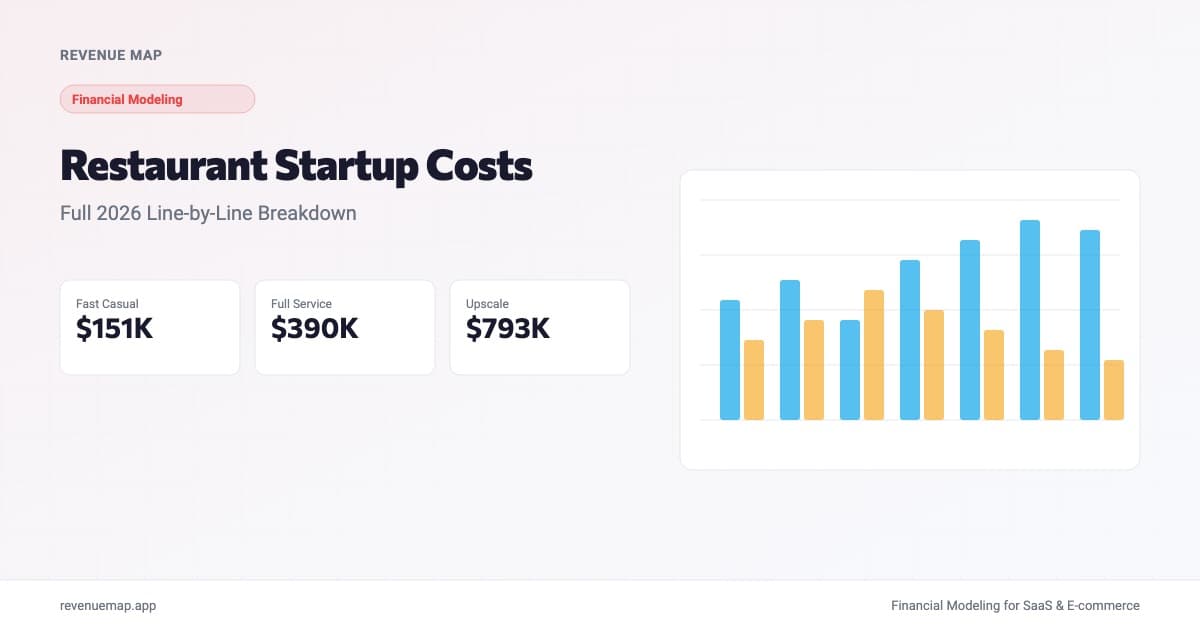
Restaurant startup costs range from roughly $175,000 to $750,000 depending on the concept, location, and condition of the space. Leasehold improvements and kitchen equipment account for about 60% of the total, with permits, inventory, marketing, and working capital making up the rest.
Those numbers matter more than the menu. This week, Kitchen + Kocktails announced it will open its largest restaurant yet in New York's Times Square, the brand's eighth location after launching in Dallas just six years ago. At the other end of the spectrum, Wendy's is fighting in bankruptcy court to reclaim restaurants from Meritage Hospitality, a franchisee that operated over 300 locations before filing. Rapid growth and spectacular failure both start with the same question: do the startup economics actually work? Here is a full breakdown of what it costs to open a restaurant in 2026, what first-time owners tend to underestimate, and how to keep the total manageable.
What Does It Cost to Open a Restaurant?
The total depends on three factors: your concept (counter-service vs. full-service vs. fine dining), the condition of your space (second-generation restaurant vs. raw shell), and your market (a lease in Nashville costs very differently than one in Times Square).
Here is a realistic range across the three most common concept types:
| Category | Fast Casual | Full Service | Upscale / Fine Dining |
|---|---|---|---|
| Leasehold improvements | $30,000 | $125,000 | $250,000 |
| Kitchen equipment | $40,000 | $75,000 | $150,000 |
| Furniture, fixtures, decor | $10,000 | $35,000 | $80,000 |
| POS system and technology | $3,000 | $8,000 | $15,000 |
| Permits, licenses, liquor license | $5,000 | $15,000 | $40,000 |
| Initial food and bar inventory | $5,000 | $15,000 | $25,000 |
| Insurance (first year) | $5,000 | $10,000 | $18,000 |
| Marketing and signage | $5,000 | $12,000 | $25,000 |
| Pre-opening payroll (staff training) | $8,000 | $20,000 | $40,000 |
| Working capital (6 months) | $40,000 | $75,000 | $150,000 |
| Total | $151,000 | $390,000 | $793,000 |
Most first-time independent restaurant owners land in the mid-range: $300,000 to $450,000 all in. That includes a full-service concept in a second-generation space that needs moderate renovation. If you are working from a raw shell with no kitchen infrastructure, add $50,000 to $100,000 for plumbing, HVAC, and electrical before the buildout even starts.
The Five Biggest Cost Categories
1. Leasehold Improvements ($30,000 to $250,000)
This is the single most variable line item. A second-generation restaurant space (one that previously housed a restaurant) already has kitchen ventilation, grease traps, plumbing rough-ins, and possibly a hood system. Converting that space might cost $30,000 to $80,000. Building out a raw retail shell can easily exceed $200,000 because you are installing all of that infrastructure from scratch.
The honest answer is: tour the space with a contractor before you sign the lease. A buildout estimate that comes after the lease is signed is how restaurants blow through their budgets before they open.
2. Kitchen Equipment ($40,000 to $150,000)
Equipment costs scale with menu complexity. A pizza concept needs ovens, a dough mixer, and a prep station. A full-service restaurant with a diverse menu needs ranges, fryers, a hood system, a walk-in cooler, a walk-in freezer, a dishwasher, and dozens of smaller pieces.
| Menu Type | Key Equipment | Typical Cost |
|---|---|---|
| Pizza or sandwich shop | Oven, mixer, prep station, small cooler | $35,000 to $55,000 |
| Fast casual (bowls, tacos) | Griddle, steam table, fryer, prep station | $40,000 to $65,000 |
| Full-service with bar | Range, fryer, grill, hood, walk-in, bar equipment | $70,000 to $120,000 |
| Fine dining | Commercial range, sous vide, blast chiller, full hood | $100,000 to $150,000 |
Used equipment can cut these numbers by 30% to 50%. Restaurant supply auctions happen constantly because, unfortunately, restaurants close constantly. A commercial range that retails for $8,000 might sell for $3,000 at auction. The risk is reliability, so budget for inspection and potential repairs.
3. Working Capital ($40,000 to $150,000)
Here's the thing: working capital is the line item that keeps restaurants alive. Most new restaurants run at a loss for the first three to six months while they build a customer base, optimize staffing, and work through early operational problems. If every dollar goes into the buildout, a single slow month can force you to close.
Budget at least six months of operating expenses as working capital. For a full-service restaurant with $25,000 in monthly rent, $30,000 in labor, and $15,000 in food costs, that means $70,000 to $80,000 in cash reserves just to survive the ramp-up.
4. Permits, Licenses, and Legal ($5,000 to $40,000)
A liquor license alone can range from $3,000 in some states to $50,000+ in others (New York and California are particularly expensive). Add health department permits, building permits, fire department approval, a food handler's license, a business license, and potentially a sidewalk cafe permit. Budget $15,000 for a full-service restaurant with alcohol; double that in high-regulation markets.
5. Pre-Opening Costs ($8,000 to $40,000)
You need to train your staff before opening night. That means 2 to 4 weeks of payroll before any revenue comes in. For a team of 15 to 25 people, that is $8,000 to $25,000 in wages alone. Add soft-opening food costs, friends-and-family event expenses, and the final push on marketing materials, and pre-opening costs run $15,000 to $40,000 for a full-service concept.
Hidden Costs That Catch First-Time Owners
Beyond the table above, these recurring and one-time costs surprise new operators:
Delivery commissions (15% to 30% of delivery revenue). If you use DoorDash, Uber Eats, or Grubhub, you are paying 15% to 30% per order. On $8,000 in monthly delivery revenue, that is $1,200 to $2,400 per month that never hits your bank account. This week's DoorDash settlement with New York City for $131.5 million highlights how the economics of delivery remain contentious on all sides. Factor delivery commissions into your projections from day one, or build a direct ordering channel.
Utility deposits and setup ($3,000 to $10,000). Gas, electric, water, and waste removal all require commercial deposits. A commercial gas hookup alone may need a $2,000 to $5,000 deposit depending on your utility provider.
Grease trap installation and maintenance ($2,000 to $8,000 initial, $300 to $600/month). Every restaurant that cooks with oil or grease needs a compliant grease trap. Installation costs vary by local code. Ongoing pumping and maintenance is a monthly expense most projections miss.
POS transaction fees (2.5% to 3.5% of revenue). On $60,000 in monthly revenue, card processing takes $1,500 to $2,100 per month. That adds up to $18,000 to $25,000 per year.
Ongoing repairs and maintenance ($500 to $2,000/month). Commercial kitchen equipment breaks. Plumbing clogs. HVAC units fail in the middle of summer. Budget for it from the start.
Calculate Your Restaurant Startup Costs
Restaurant Startup Cost Calculator
Estimate your total startup investment by concept
Want to model this over 36 months with scenarios? Try Revenue Map free →
For a more detailed estimate that factors in your specific concept and location, try the startup cost calculator.
How to Finance Restaurant Startup Costs
Most restaurant owners fund their opening through a combination of personal investment, bank loans, and SBA programs.
SBA 7(a) loans ($50,000 to $5 million). The SBA 7(a) program is the most common route for restaurant financing. Terms run 10 to 25 years depending on the use of funds, and interest rates are typically prime plus 2.25% to 2.75%. You will need a complete restaurant business plan with financial projections, a detailed use-of-funds breakdown, and a debt service coverage ratio above 1.25x. If you are unfamiliar with what lenders expect, the guide on writing a business plan for a business loan walks through the full checklist.
Equipment financing. Restaurant equipment lenders will finance ovens, walk-ins, hood systems, and POS hardware using the equipment itself as collateral. Down payments are 10% to 20%, terms are 3 to 7 years, and approval is faster than SBA. This works well for the $40,000 to $150,000 equipment portion while you finance the buildout separately.
Owner equity. Lenders expect skin in the game. Most require 20% to 30% equity injection. On a $390,000 project, that is $78,000 to $117,000 from the owner's personal funds or outside investors.
How to Reduce Startup Costs Without Cutting Corners
Take over a second-generation space. A former restaurant already has ventilation, grease traps, and plumbing. This alone can save $50,000 to $100,000 compared to a raw shell.
Buy used equipment at auction. Restaurant closures mean a steady supply of commercial equipment at 30% to 60% off retail. Check local auctions and liquidation sales.
Start with a focused menu. Fewer dishes means less equipment, less inventory waste, and simpler operations. You can always expand later once cash flow supports it. Track your gross margins per dish from the first week so you know which items actually make money.
Negotiate tenant improvement allowances. Many landlords offer TI allowances ($20 to $50 per square foot) in exchange for a longer lease term. On a 2,500 square foot space, that is $50,000 to $125,000 toward your buildout that you do not have to finance yourself.
Skip full-service if the concept allows it. The gap between a fast-casual restaurant ($151,000) and a full-service restaurant ($390,000) is significant. Counter-service cuts labor costs, simplifies operations, and reduces the capital you need to raise. The break-even math changes dramatically when you remove table service from the equation.
Key Takeaways
- Restaurant startup costs range from $175,000 to $750,000, with most independent full-service restaurants costing $300,000 to $450,000 all in.
- Leasehold improvements and kitchen equipment account for roughly 60% of total costs. A second-generation restaurant space can cut the buildout by $50,000 to $100,000.
- Working capital (six months of operating expenses) is the single most important line item. Restaurants that spend everything on the buildout and open with no cash reserve are the ones that close in year one.
- Hidden recurring costs like delivery commissions (15% to 30%), POS fees (2.5% to 3.5%), and equipment maintenance ($500 to $2,000/month) add $30,000 to $60,000 per year that first-time projections often miss.
- SBA 7(a) loans and equipment financing are the most common funding paths. Both require financial projections and a written plan with a DSCR above 1.25x.
Planning a restaurant launch? Build your startup cost projections and first-year cash flow for free with Revenue Map. It takes about two minutes, and you will have the numbers ready for a lender meeting or a lease negotiation.
Related Articles
Food Truck Startup Costs: Full 2026 Breakdown
How much does it cost to start a food truck? Expect $50K to $200K depending on the truck, equipment, and permits. Line-by-line breakdown inside.
Restaurant Business Plan: Financials That Get Funded
Build the financial section of your restaurant business plan with real startup costs, revenue projections, and cash flow numbers lenders expect.
Pizza Shop Business Plan: The Financial Section
Build the financials for your pizza shop business plan with real startup costs, revenue projections, and margins lenders verify.