Beauty Supply Store Business Plan: Costs and Projections
A beauty supply store business plan should include startup costs of $101,000 to $304,000, with inventory alone running $50,000 to $150,000. Gross margins on beauty products average 45% to 55%, and most lenders require a 12-month cash flow forecast with a debt service coverage ratio of 1.25x or higher.
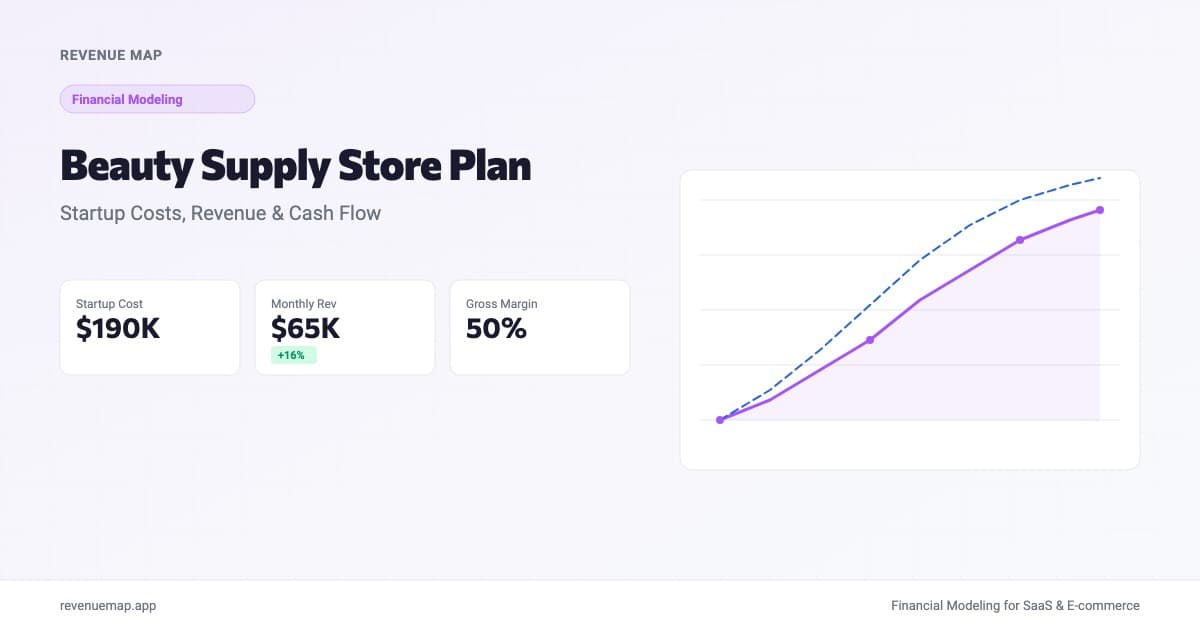
A beauty supply store business plan needs a financial section built on inventory investment, product margins by category, and a realistic sales ramp. Lenders approve retail loans based on projected cash flow, a startup cost breakdown that accounts for the heavy upfront inventory buy, and evidence the store can cover debt payments while building a customer base. The concept and location matter, but the numbers close the deal.
Small Business Trends recently outlined seven tactics for boosting in-store sales, from product bundling to loyalty programs. Those strategies matter, but they come after the plan is funded. For anyone putting together a business plan for a beauty supply store, here is how to build the financial section that banks and SBA lenders expect.
How Much Does It Cost to Open a Beauty Supply Store?
Startup costs for a beauty supply store range from about $101,000 for a small neighborhood shop to $304,000 for a large, well-stocked location in a high-traffic retail corridor. Inventory is the dominant expense, which separates this business from service-based models like a salon where buildout costs lead.
Here is a realistic breakdown for a 1,500-square-foot beauty supply store:
| Category | Low Estimate | Mid Estimate | High Estimate |
|---|---|---|---|
| Initial inventory (hair care, cosmetics, wigs, accessories) | $50,000 | $90,000 | $150,000 |
| Leasehold improvements and buildout | $8,000 | $20,000 | $40,000 |
| Display fixtures, shelving, and signage | $8,000 | $18,000 | $30,000 |
| POS system and inventory management software | $2,000 | $4,000 | $8,000 |
| Security (cameras, anti-theft tags, alarm) | $3,000 | $6,000 | $12,000 |
| Permits, licenses, and insurance (first year) | $3,000 | $6,000 | $10,000 |
| Marketing, grand opening, and website | $3,000 | $8,000 | $14,000 |
| Working capital (6 months) | $24,000 | $38,000 | $40,000 |
| Total | $101,000 | $190,000 | $304,000 |
The inventory line deserves the most attention. Too thin and customers leave; too broad and slow-moving SKUs tie up cash for months. Open with 60% to 70% of your target SKU count, track what sells in the first 90 days, and fill gaps with reorders.
Working capital is just as critical here as it is for a coffee shop. A plan that spends everything on inventory and opens with an empty cash reserve is the scenario lenders reject first. Use the startup cost calculator to adjust these figures for your market.
How to Project Beauty Supply Store Revenue
Revenue for a beauty supply store is driven by daily foot traffic, average transaction value, and days open per month. The core formula:
Monthly Revenue = Daily Customers x Avg Transaction x Days Open
Here is what benchmarks look like across different store sizes and locations:
| Format | Daily Customers | Avg Transaction | Days/Month | Monthly Revenue |
|---|---|---|---|---|
| Small neighborhood store (800 sq ft) | 50 | $20 | 26 | $26,000 |
| Mid-size store (1,500 sq ft) | 100 | $25 | 26 | $65,000 |
| Large high-traffic store (2,500 sq ft) | 160 | $30 | 26 | $124,800 |
| Online-hybrid (store + e-commerce) | 80 in-store + online | $28 | 30 | $78,400 |
The mid-size store is the sweet spot for most independent owners. A hundred customers per day at a $25 average ticket across 26 operating days produces about $65,000 in monthly revenue at mature traffic levels.
For year one, assume 40% of stabilized traffic in months one through three, ramping to 65% by month six, and reaching 85% by month nine. Any plan projecting full traffic from day one will get flagged by a lender. Our financial projections template guide covers the framework for building these ramp curves.
Wigs and extensions are the highest-margin, highest-ticket category. A store that builds a reputation for quality wigs can shift its average transaction to $35 or higher. That single category often accounts for 25% to 40% of total revenue.
Calculate Your Beauty Supply Store Revenue
Beauty Supply Store Revenue Calculator
Estimate your monthly and annual store revenue
Margins and Cost Benchmarks
Beauty supply margins are more favorable than most general retail. Unlike a bakery, there is no perishable inventory: shelf life runs 18 to 36 months. The main risk is trend-driven obsolescence, not expiration.
| Category | Gross Margin | Notes |
|---|---|---|
| Hair care products (shampoo, conditioner, styling) | 40-50% | Competitive category, brand-driven pricing |
| Cosmetics and makeup | 45-55% | Higher margins on private-label or lesser-known brands |
| Wigs and extensions | 50-70% | Highest margin category, also highest average ticket |
| Hair accessories and tools | 55-75% | Low cost of goods, impulse-buy placement helps |
| Nail products | 40-50% | Steady demand, moderate margins |
| Blended gross margin | 45-55% | Depends on category mix and wig sales share |
After gross margin, here is where the rest of revenue goes:
| Expense Category | % of Revenue | Monthly (at $65K rev) |
|---|---|---|
| Cost of goods sold | 45-55% | $29,250-$35,750 |
| Rent and occupancy | 8-12% | $5,200-$7,800 |
| Labor (2-3 employees + owner) | 10-15% | $6,500-$9,750 |
| Shrinkage and loss | 1-3% | $650-$1,950 |
| Marketing and promotions | 2-4% | $1,300-$2,600 |
| Other operating expenses | 3-5% | $1,950-$3,250 |
| Net profit (before owner draw) | 10-18% | $6,500-$11,700 |
Shrinkage is a real line item in beauty supply retail. Small, high-value products (cosmetics, lashes, styling tools) are frequent theft targets. Budget 1% to 3% of revenue for shrinkage and invest in security from day one.
Labor costs are lower than in a salon because employees are stocking shelves and running a register, not performing skilled services. Product knowledge matters enormously for building a cosmetics shop business plan that works in practice: customers who trust staff recommendations buy more and come back.
12-Month Cash Flow for a New Beauty Supply Store
Here is a 12-month projection for a mid-size beauty products store business plan with $190,000 in startup costs, a $140,000 SBA loan, and $50,000 in owner equity. Working capital reserve after buildout: $38,000.
| Month | Revenue | COGS (50%) | Labor (12%) | Other OpEx | Loan Payment | Net Cash Flow | Cumulative Cash |
|---|---|---|---|---|---|---|---|
| 1 | $26,000 | $13,000 | $3,120 | $5,400 | $1,640 | $2,840 | $40,840 |
| 2 | $32,500 | $16,250 | $3,900 | $5,400 | $1,640 | $5,310 | $46,150 |
| 3 | $39,000 | $19,500 | $4,680 | $5,500 | $1,640 | $7,680 | $53,830 |
| 6 | $52,000 | $26,000 | $6,240 | $5,700 | $1,640 | $12,420 | $86,470 |
| 9 | $58,500 | $29,250 | $7,020 | $5,900 | $1,640 | $14,690 | $131,380 |
| 12 | $61,750 | $30,875 | $7,410 | $6,000 | $1,640 | $15,825 | $181,175 |
Other operating expenses include rent, utilities, insurance, POS subscription, marketing, and shrinkage. Loan payment assumes a 10-year SBA 7(a) loan at 10.5%. Net cash flow is before any owner draw.
Even month one is positive. Beauty supply retail generates revenue from the first day the doors open, unlike service businesses that wait months for appointment books to fill. The ramp is in foot traffic volume, not in the ability to generate a transaction.
Track inventory turnover weekly. A healthy beauty supply store turns inventory 4 to 6 times per year. Slow-moving SKUs that sit past 90 days are the first sign that projected and actual COGS are diverging.
What Do Lenders Check in a Beauty Supply Store Business Plan?
Our full guide on writing a business plan for a business loan covers the broader framework. Here are the items beauty supply lenders focus on:
-
Debt service coverage ratio (DSCR). Most lenders require 1.25x or higher. In the projection above, stabilized net cash flow of $15,800 per month against a $1,640 payment gives a DSCR of 9.6x before owner draw. After a $5,000 monthly draw, the ratio is still 6.6x.
-
Inventory plan and supplier terms. Lenders want named suppliers, payment terms (net 30 vs. COD), minimum order quantities, and your plan for managing slow movers. Vague lines like "beauty products: $90,000" will not pass review.
-
Location and foot traffic data. Lenders want traffic counts, co-tenants (nail salons, barbershops, and laundromats nearby are good signals), and lease terms. A five-year lease with a personal guarantee is standard for SBA-backed retail loans.
-
Shrinkage and loss prevention plan. Banks that lend to retail businesses understand shrinkage. Including a loss prevention budget and strategy (cameras, EAS tags, store layout that maximizes visibility) signals you know the category's real risks. Support networks for independent retail owners are expanding too, with the Visa Foundation recently pledging $2 million to small business ecosystems.
Common Mistakes in Beauty Supply Store Financial Plans
-
Over-investing in inventory before understanding local demand. Start with core categories (hair care, top cosmetics brands, a curated wig selection), track sales velocity for 90 days, and expand based on what customers actually buy. Overstocked inventory is dead cash.
-
Ignoring the wig and extensions category. This is the highest-margin, highest-ticket segment. Dedicate visible retail space, train staff on product differences, and consider a private fitting area for wig customers.
-
Underestimating shrinkage. Budgeting zero for shrinkage tells a lender you have not researched the category. Build 1% to 3% into your cost model and show the security investment that keeps it at the low end.
-
Skipping the break-even analysis. A store leaning toward lower-margin hair care breaks even at higher revenue than one with a strong wig business. Run the analysis on your specific product mix, not industry averages.
Key Takeaways
- Startup costs range from $101,000 to $304,000. Inventory ($50,000 to $150,000) is the single largest line item.
- A mid-size store at 100 daily transactions and a $25 average ticket generates about $65,000 per month at stabilized traffic.
- Blended gross margins of 45% to 55% put beauty supply above most general retail. Wigs and extensions at 50% to 70% margins are the highest-value category.
- Net margins of 10% to 18% (before owner draw) leave room for debt service. Track inventory turnover and shrinkage weekly.
- Lenders want a DSCR of 1.25x or higher, a named-supplier inventory plan, and a loss prevention strategy.
Ready to build the financial model behind your beauty supply store business plan? Start with Revenue Map, select your business type, and get a three-year projection you can hand to a lender. Free, two minutes.
Related Articles
Salon Suite Business Plan: Costs and Projections
Build the financial section of your salon suite business plan with startup costs, rental revenue projections, and the cash flow lenders check.
Hot Dog Cart Business Plan: Costs and Projections
Build the financial section of your hot dog cart or food cart business plan with startup costs, revenue projections, and the cash flow lenders check.
Car Detailing Business Plan: Costs and Projections
Build the financial section of your car detailing business plan with real startup costs, revenue estimates, and break-even numbers lenders check.